
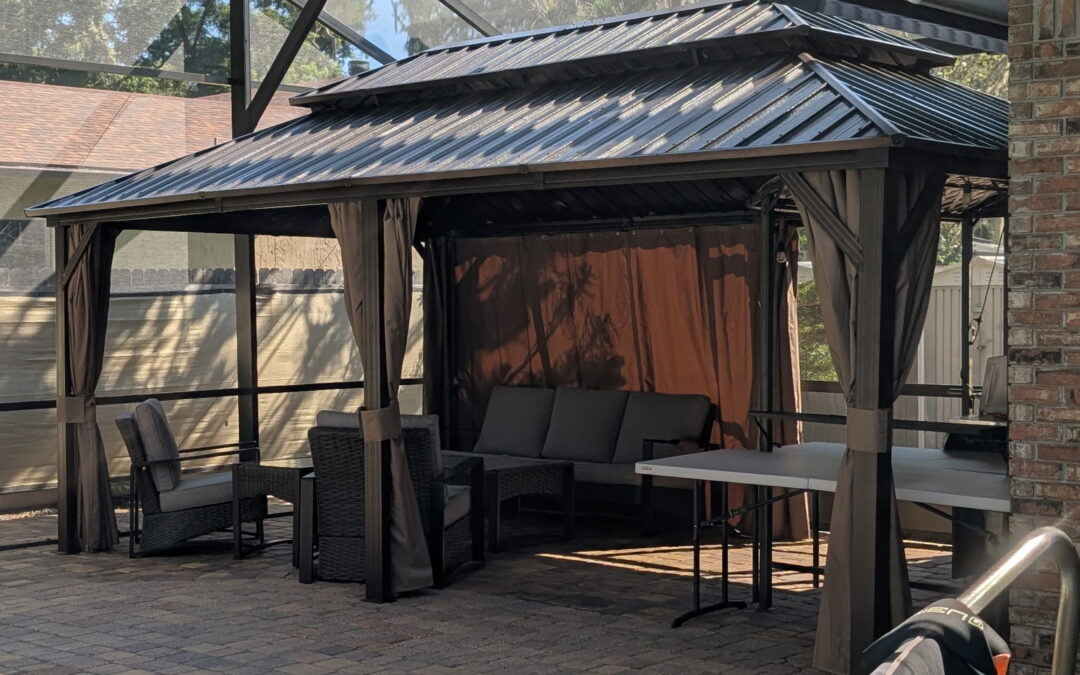
Screen mesh doesn’t last forever, even on a structurally sound enclosure. Here’s how to know when it’s time to rescreen, and what the process actually involves.
Typical Screen Lifespan
Standard fiberglass screen mesh typically lasts 10-15 years under normal conditions. Coastal properties, or those exposed to more intense sun and salt air, may see a shorter lifespan — closer to 8-12 years — due to accelerated UV and salt exposure.
Signs Your Screens Need Replacing
- Multiple tears or holes, especially if they’re spread across different panels rather than one isolated spot
- Brittleness — mesh that feels stiff or cracks easily when touched has likely degraded from UV exposure
- Visible sagging in panels that used to sit taut
- Discoloration beyond normal fading, which can indicate material breakdown
- Repeated small repairs that are starting to add up to more than a full rescreen would cost
Other Warning Signs Worth a Call
- A door that doesn’t close or latch properly. This can mean the door frame has shifted, and it can become a security and pool-safety gap.
- White, chalky corrosion or pitting near the base channel or at joints where water collects. Caught early, this is often a simpler, less expensive repair.
- Standing water in structural gutters after rain has stopped, a sign they need clearing.
- New gaps where screen meets frame. These let insects in and often mean the spline has degraded or loosened.
Most of these are quick, inexpensive fixes when caught early, and expensive, involved repairs when ignored for years.
One Important Caveat: Rule Out a Frame Problem First
If screens keep tearing in the same specific spots even after replacement, that’s usually a frame issue, not an age issue — a distorted or shifted frame puts uneven tension on new mesh, causing it to fail again quickly regardless of how new the screen is. A good contractor checks the frame before recommending a rescreen.
What the Rescreening Process Involves
- Assessment. We check the frame is structurally sound before proceeding — rescreening a bad frame just means you’re back here again soon.
- Old screen removal. Existing mesh and spline are removed from each panel.
- New screen installation. Fresh mesh is installed and secured with new spline for a clean, taut fit.
- Final check. Panels are inspected for proper tension and fit.
Choosing New Mesh
Rescreening is also a good opportunity to upgrade — switching to pet-resistant mesh if you now have a dog, or no-see-um mesh if insect pressure has become more of an issue since the original installation.
A Quick Do-It-Yourself Check
You can learn a lot in ten minutes with a walk around your enclosure. Try this checklist:
- Press gently on a few panels. Mesh that stays taut and springs back is healthy. Mesh that feels brittle, loose, or powdery is near the end.
- Look at the screens from the inside on a bright day. Thin spots, fraying, or light patches show wear that is hard to see from outside.
- Check the spline (the rubber cord that holds the mesh in the channel). If it is cracked, shrunken, or popping out, the screen will not hold tension.
- Look at the lower panels. These take the most abuse from pets, kids, pool toys, and landscaping equipment.
- Open and close every door. Make sure each latches without force.
- Look along the roofline and gutters for sagging, standing water, or debris buildup.
Full Rescreen or Partial?
You do not always need to replace everything. If the damage is limited to a few lower panels or one side that gets the harshest sun, a partial rescreen can be a sensible fix. The trade-off is that new and old mesh will age at different rates, and the colors may not match perfectly. If most panels show wear, a full rescreen gives you an even look and a fresh start on the lifespan clock.
Frequently Asked Questions
How long does a rescreen take? It depends on the size of the enclosure and how many panels are involved. We will give you a clear expectation at the assessment.
Do I need a permit to rescreen? Replacing mesh on an existing frame is different from building or altering the structure. If you are unsure, ask us and we will tell you what applies to your situation.
Can I change screen types? Yes. This is the best time to upgrade to no-see-um, solar, or pet-resistant mesh.
What if the frame turns out to be the problem? We will tell you honestly. See our guide on rescreening vs. a full enclosure rebuild to understand the difference ahead of time.
Help Your New Screens Last
- Rinse the screens with a garden hose and mild soapy water from time to time to remove pollen, salt, and dirt.
- Trim back branches that rub against the mesh in wind.
- Keep sharp objects and pressure washers away from the screen.
- Schedule a periodic inspection so small problems get caught early. Our maintenance guide walks through what to check.
Ready for a Rescreen?
We handle full and partial rescreens on enclosures of any age or original builder throughout Northeast Florida.
Call Wayne or JT Kish at (904) 805-4343 for a free assessment, or use our free estimate form online.
FL Certified Specialty Contractor — Lic. #SCC131149801 | Licensed & Insured