
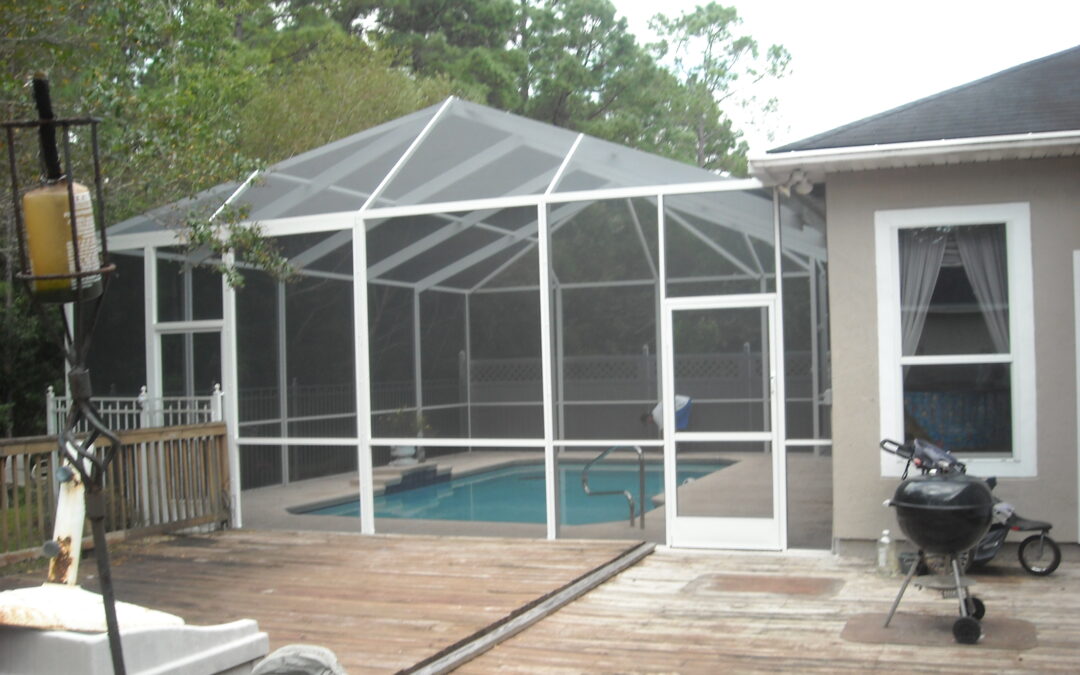
Once your screen enclosure is built, the landscaping around it is what ties the whole space together. A few plant choices work especially well near an enclosure, and a few create maintenance headaches down the road. Here’s what Jacksonville homeowners should know before heading to the nursery.
What Tends to Work Well
- Low-growing groundcovers and dwarf shrubs near the base of the frame — they soften the aluminum’s edge without growing tall enough to brush against the screen.
- Potted plants on the inside of the enclosure — palms, ferns, and flowering plants that like filtered light do well on a screened lanai, and pots keep roots from affecting the slab or footers.
- Native, salt- and heat-tolerant species like coontie, muhly grass, or dwarf yaupon holly, which hold up to Northeast Florida’s climate with minimal upkeep.
What to Avoid Planting Too Close
- Fast-growing trees or large shrubs right next to the frame — branches that grow into the screen will tear it, and roots can eventually stress footers and anchor points.
- Thorny or dense plants directly against door thresholds — they make screen doors harder to use and create a spot for debris to collect against the frame.
- Anything that drops heavy fruit, seed pods, or sap overhanging the roof panels — this is a common cause of stains and clogged structural gutters.
A Few Practical Tips
Leave at least a few feet of clearance between mature plant growth and the enclosure frame, especially near roof lines. If you’re landscaping right after your enclosure is built, it’s worth sketching out where irrigation heads and planting beds will go before anything is installed — moving a sprinkler head after the fact is more work than planning around the frame from the start.
Don’t Forget the Base Channel
Mulch and soil piled up against the enclosure’s base channel can trap moisture against the aluminum and screen spline. Keep a small gap between ground cover and the base of the frame so water can drain away instead of sitting against it.
📞 Call (904) 805-4343 for a free, no-pressure estimate — typically on-site within a day or two.